






Berlin’s History Written in Its Streets
Berlin is one of the most historically layered cities in Europe, and a walking tour is how those layers become visible. The Prussian empire, the Weimar Republic, the Third Reich, the Cold War division, reunification, and the contemporary city all left physical traces — sometimes on the same block — and a guide who narrates these layers transforms a walk through Berlin’s streets from pleasant sightseeing into a continuously unfolding history lesson.
The city is large (roughly 10 times the area of Paris) but the key historical sites are concentrated in the Mitte district. A central Berlin walking tour covers the Brandenburg Gate, the Reichstag, the Holocaust Memorial, the Topography of Terror, Checkpoint Charlie, the Berlin Wall remnants, Bebelplatz, Museum Island, Unter den Linden, Gendarmenmarkt, and the Alexanderplatz and TV Tower area — all within a manageable 3–5 kilometre walk.
Walking Tour Types
Historical overview tours cover Berlin’s full timeline — Prussian capital, imperial power, Weimar democracy, Nazi dictatorship, wartime destruction, Cold War division, reunification, and contemporary Berlin. These run 3–4 hours and give you the comprehensive city narrative. This is the tour to do first.
Third Reich tours focus specifically on the Nazi period — the Holocaust Memorial, the Topography of Terror, the bunker site, Bebelplatz, and the Reichstag. Typically 3–4 hours.
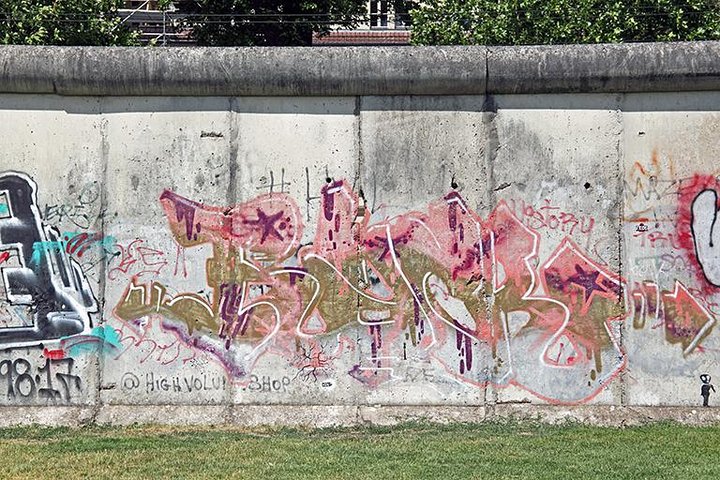
Cold War and Berlin Wall tours trace the Wall’s path through the city — Checkpoint Charlie, the East Side Gallery, the Berlin Wall Memorial on Bernauer Strasse. Typically 3–4 hours.
Free walking tours operate on a tip-based model — the tour is free, and you pay what you feel the experience was worth. Berlin’s free tour scene is the best in Europe — the guides are knowledgeable, the groups are large (sometimes 30–50 people), and the tip model means the guide is motivated to deliver. The quality rivals paid tours, though the group size reduces the intimacy.
Alternative and street art tours (covered in their own sections) explore the neighbourhoods outside the central tourist route — Kreuzberg, Friedrichshain, Neukölln — and the counter-cultural identity that makes Berlin distinctive.
Practical Tips
Berlin is flat. The entire city centre is essentially level, making walking tours accessible to most fitness levels. The distances can be significant (4–6 kilometres on a comprehensive tour) but the terrain is never challenging.
Dress for the weather. Berlin’s continental climate means hot summers, cold winters, and the possibility of rain at any time. Walking for 3–4 hours requires appropriate footwear and layers.
Free tours are genuinely good. Do not dismiss them because they are free. The best Berlin free walking tours are delivered by experienced guides who have been doing this for years. The tip structure is their income — they deliver quality because they earn from it.
Frequently Asked Questions
How long is a Berlin walking tour?
Most run 2.5–4 hours covering 3–6 kilometres. Specialist tours (Third Reich, Cold War) run 3–4 hours. Combined tours can run 5–6 hours.
Which walking tour should I do first?
The general historical overview tour. It covers all periods and gives you the framework for understanding Berlin. Specialist tours (Third Reich, Cold War, alternative) build on this foundation.
Are Berlin walking tours suitable for children?
General overview tours suit children aged 10 and above. Third Reich and Holocaust tours are best for ages 12+. Alternative and street art tours engage teenagers. The flat terrain is manageable for most ages, but the 3–4 hour duration can challenge younger children.
Do walking tours run in winter?
Yes. Berlin walking tours run year-round. Winter tours are colder but the city has a particular atmosphere in the cold — the Berlin Wall Memorial in snow, the Christmas markets if timed right, and fewer tourists at the major sites. Dress warmly.