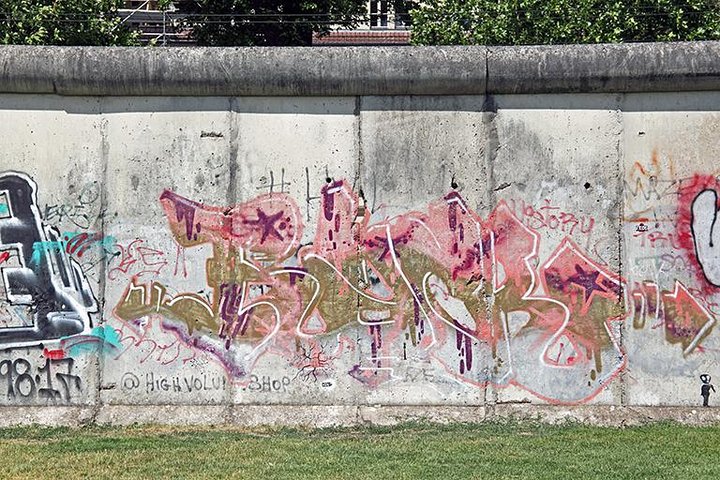


Life Behind the Wall
An East Berlin tour explores the former eastern half of the divided city — the architecture, the ideology, the daily life, and the surviving traces of the German Democratic Republic (GDR) that governed East Germany from 1949 to 1990. The tour covers what the communist state built (the monumental Soviet-style Karl-Marx-Allee, the TV Tower at Alexanderplatz, the Stasi headquarters), how people lived under the system, and what remains visible today — 35 years after reunification.
What You Will See
Karl-Marx-Allee — a 2-kilometre boulevard of Soviet-style apartment blocks built in the 1950s as a showcase of socialist architecture. The buildings are monumental, symmetrical, and decorated with socialist-realist ornament. The boulevard was intended as the GDR’s grand ceremonial avenue — the Eastern answer to the Champs-Élysées. It remains one of the most complete examples of Stalinist architecture outside the former Soviet Union.
Alexanderplatz and the TV Tower (Fernsehturm) — the social and commercial centre of East Berlin. The TV Tower (368 metres, the tallest structure in Germany) was built in 1969 as a symbol of socialist modernity. The observation deck and revolving restaurant offer 360-degree views.
The DDR Museum — an interactive museum documenting everyday East German life (covered in the Cold War section).
The Stasi Museum — the former headquarters of the East German secret police (covered in the Cold War section).
Prenzlauer Berg — a former East Berlin neighbourhood that has become one of Berlin’s most desirable residential areas since reunification. The pre-war apartment buildings survived the wartime bombing largely intact, and the neighbourhood’s transformation from GDR neglect to gentrified prosperity is one of reunification’s most visible stories.
Frequently Asked Questions
Can you still see the difference between East and West Berlin?
In some areas, yes. The architecture of Karl-Marx-Allee and the Plattenbau (prefabricated concrete apartment blocks) in the eastern suburbs are distinctively GDR. The pedestrian crossing signals (the Ampelmännchen, the little green and red hat-wearing figures unique to East Germany) are preserved in the former eastern districts and have become a Berlin icon. In many central areas, however, 35 years of post-reunification development has blurred the line.
What was daily life like in East Berlin?
Life was characterised by state surveillance (the Stasi had an estimated 1 in 63 East Germans as informants), limited consumer choice, restricted travel (leaving the GDR was nearly impossible for ordinary citizens), ideological conformity in education and employment, and a system of privileges and punishments that shaped every aspect of daily existence. The DDR Museum provides the most accessible depiction of this reality.