




Berlin’s Edible History
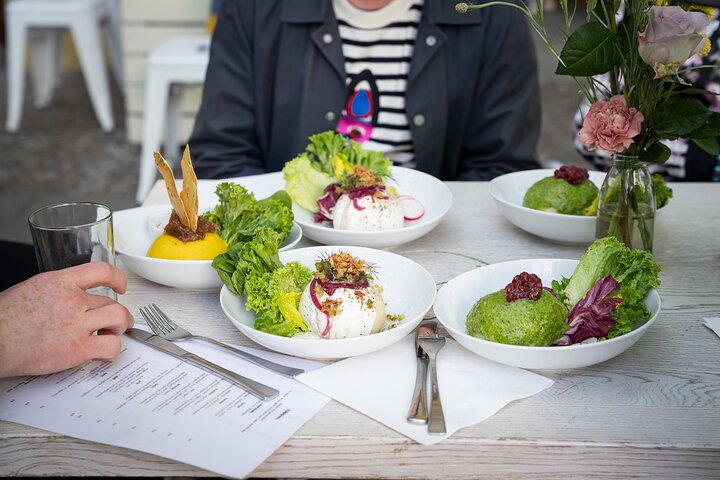
Berlin’s food culture reflects every layer of the city’s history — the Prussian tradition (hearty, meat-heavy, potato-based), the immigrant communities that reshaped the cuisine (Turkish döner kebab was effectively invented in Berlin in the 1970s, and the city now has more Turkish restaurants than any city outside Turkey), the East German legacy (simple, institutional, preserved in a few nostalgic restaurants), and the contemporary food scene (international, innovative, and increasingly plant-based). A food tour takes you through these layers with tastings at each stop and a guide who explains the cultural context behind what you are eating.
What a Berlin Food Tour Covers
Currywurst — Berlin’s signature street food: a sliced pork sausage doused in a curry-spiced ketchup sauce, served with fries. Invented in Berlin in 1949 (allegedly by Herta Heuwer, who mixed ketchup with curry powder using spices obtained from British soldiers). There is a dedicated Currywurst Museum in Berlin. The food tours visit the best vendors.
Döner kebab — the German döner, served in bread with salad and sauce, is not identical to Turkish kebab. The version universally available in Germany was developed by Turkish immigrants in Berlin in the 1970s and has become Germany’s most consumed fast food. A food tour in Kreuzberg (Berlin’s Turkish-German neighbourhood) covers the döner’s evolution and visits the vendors who make it best.
German bakery tradition (Bäckerei) — pretzels, rye bread, Berliner (jam-filled doughnuts — the pastry that JFK did not actually call himself when he said “Ich bin ein Berliner”), and the broader German bread culture that produces over 3,000 registered bread varieties.
Craft beer and traditional German beer — Berlin has a distinctive beer tradition (Berliner Weisse, a sour wheat beer served with a flavoured syrup) and a thriving contemporary craft beer scene. Some food tours include beer; dedicated beer tours are covered separately.
Market visits — Markthalle Neun in Kreuzberg (a restored 19th-century market hall with artisan food vendors, particularly lively on Thursday Street Food evenings), the Turkish Market on the Maybachufer canal (Tuesday and Friday), and seasonal farmers’ markets provide the food tour with its sourcing context.
Frequently Asked Questions
What is the most famous Berlin food?
Currywurst — a sliced pork sausage with curry-spiced ketchup sauce. It is Berlin’s signature street food and has been since 1949. An estimated 800 million currywursts are consumed in Germany annually.
Is Berlin good for vegetarians?
Yes. Berlin has the highest density of vegan and vegetarian restaurants of any city in Europe. The contemporary food scene is heavily plant-based, and food tours increasingly offer vegetarian and vegan options.
How long is a Berlin food tour?
Typically 3–4 hours with 5–8 tasting stops. The tastings are substantial — most visitors do not need a separate meal afterward.
Which neighbourhood has the best food?
Kreuzberg for the multicultural food scene (Turkish, Middle Eastern, Vietnamese, and contemporary). Mitte for upscale dining. Neukölln for the emerging food culture. Prenzlauer Berg for brunch culture. Each neighbourhood has its own food identity.